Overview
(This is an unsolicited redesign of an existing gaming platform)
Steam is a video game digital distribution service, that needs an urgent update to their entire user interface and user experience. Most of their competitors have well-designed systems and an imminent overhaul is necessary.
We have organised to create a memorable experience for clients who wish to purchase games and staying relevant the current design aesthetics.
I managed the entire UX process from user research to creating UX deliverables. My colleague helped me with organising user interviews and wire-frames.
My role
UX / UI Designer
Research
I wanted to gather adequate data before forming personas for this project. I’ve arranged user interviews with seven key users and proceeded on collecting data. Based on the information we’ve collected, we started creating personas.
Actions
- Conducted user interviews with 7 users to find out challenges that they face with the platform.
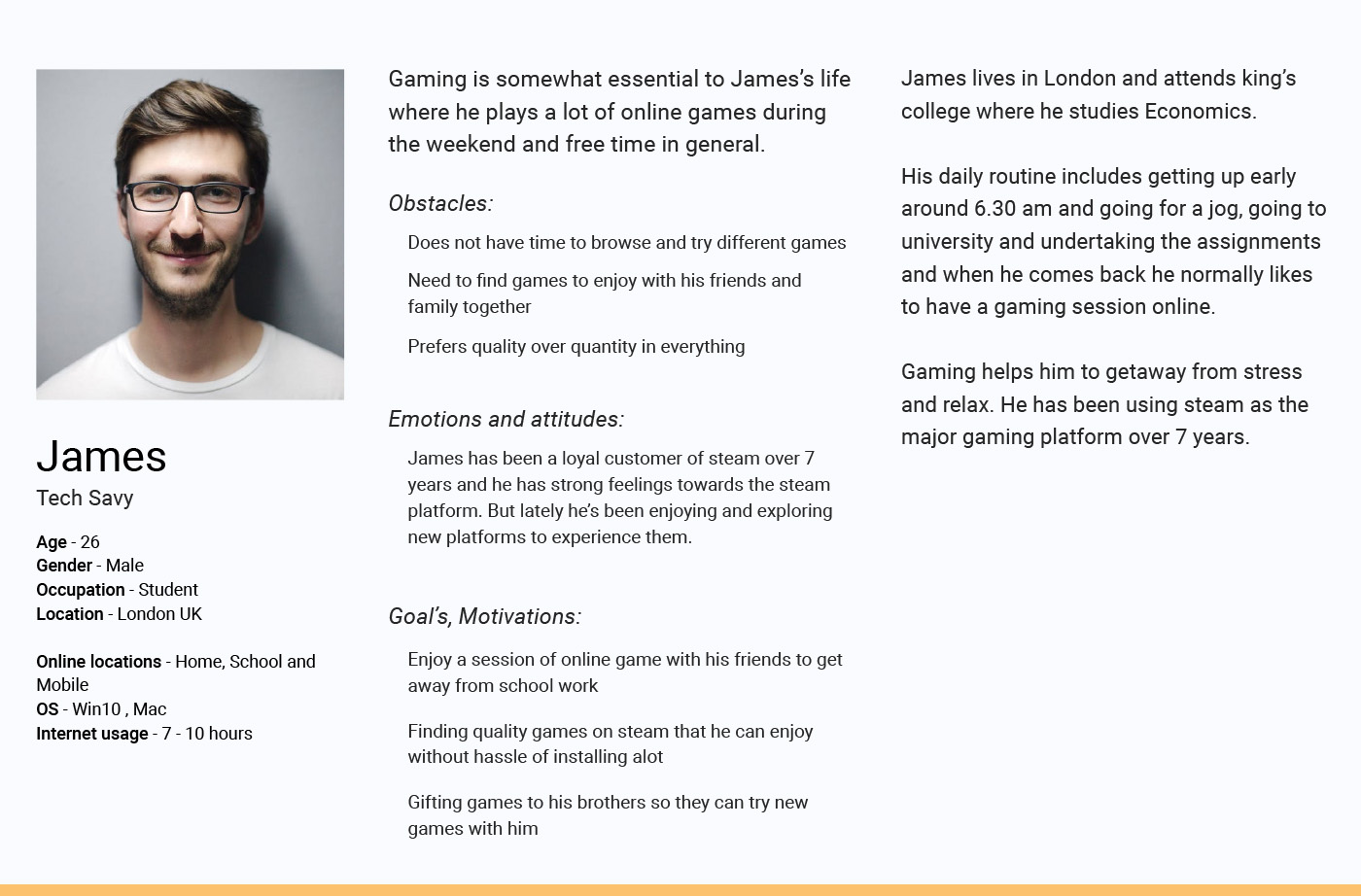
- Based on the interview results we designed personas to identify key user.
- Created user scenarios to identify pain points.
Personas
Customer insights
After wrapping up user interviews, we broke down the main pain points that needed to be addressed.
Simple navigation: One of the main problems that we needed to address was decluttering navigation, there was so much information at first glance and little organisation on how to drive a user to an accurate goal.
Searching information: Search box is one of the key features in Steam, since it supports thousands of games.
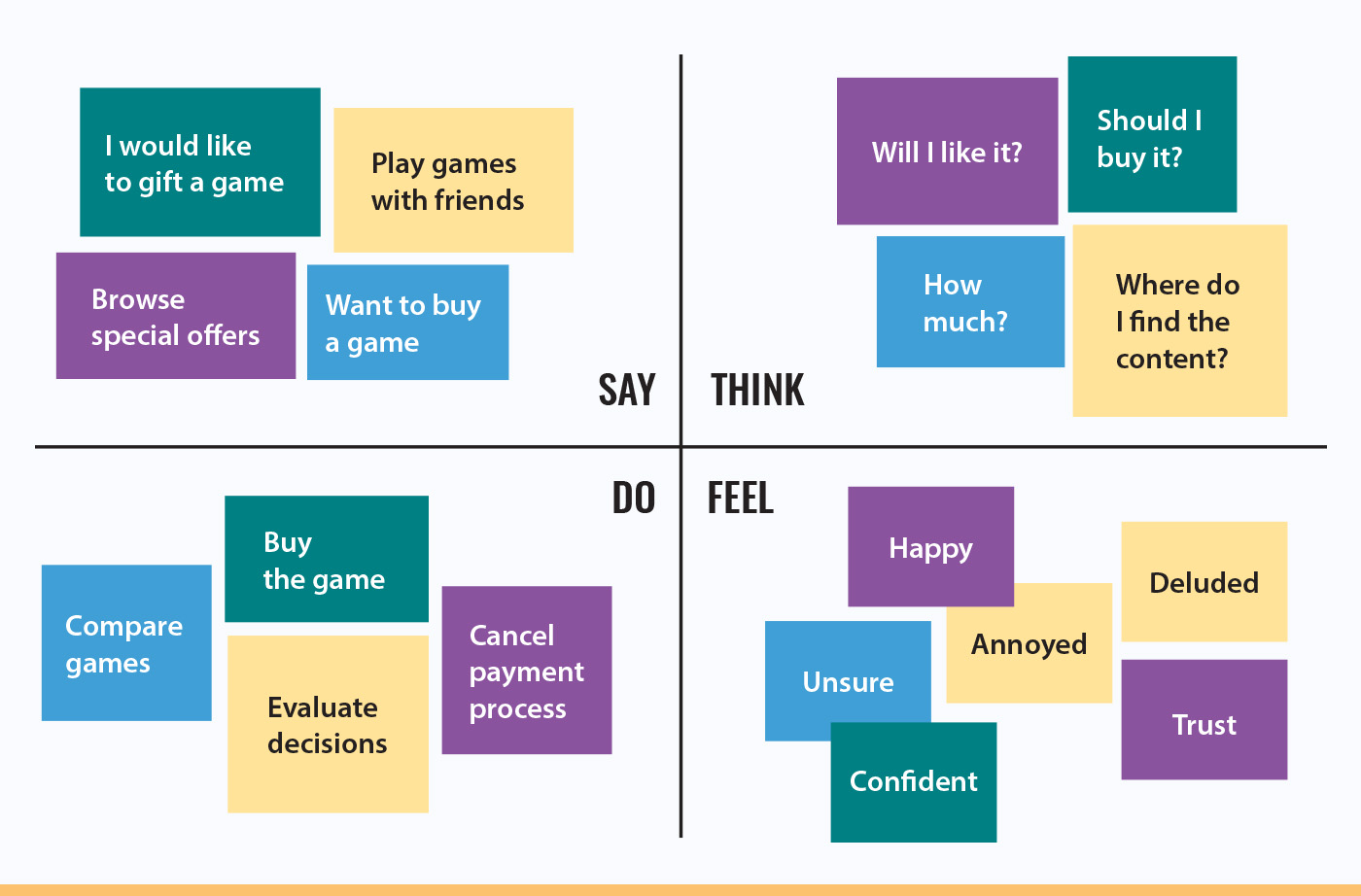
Empathy map
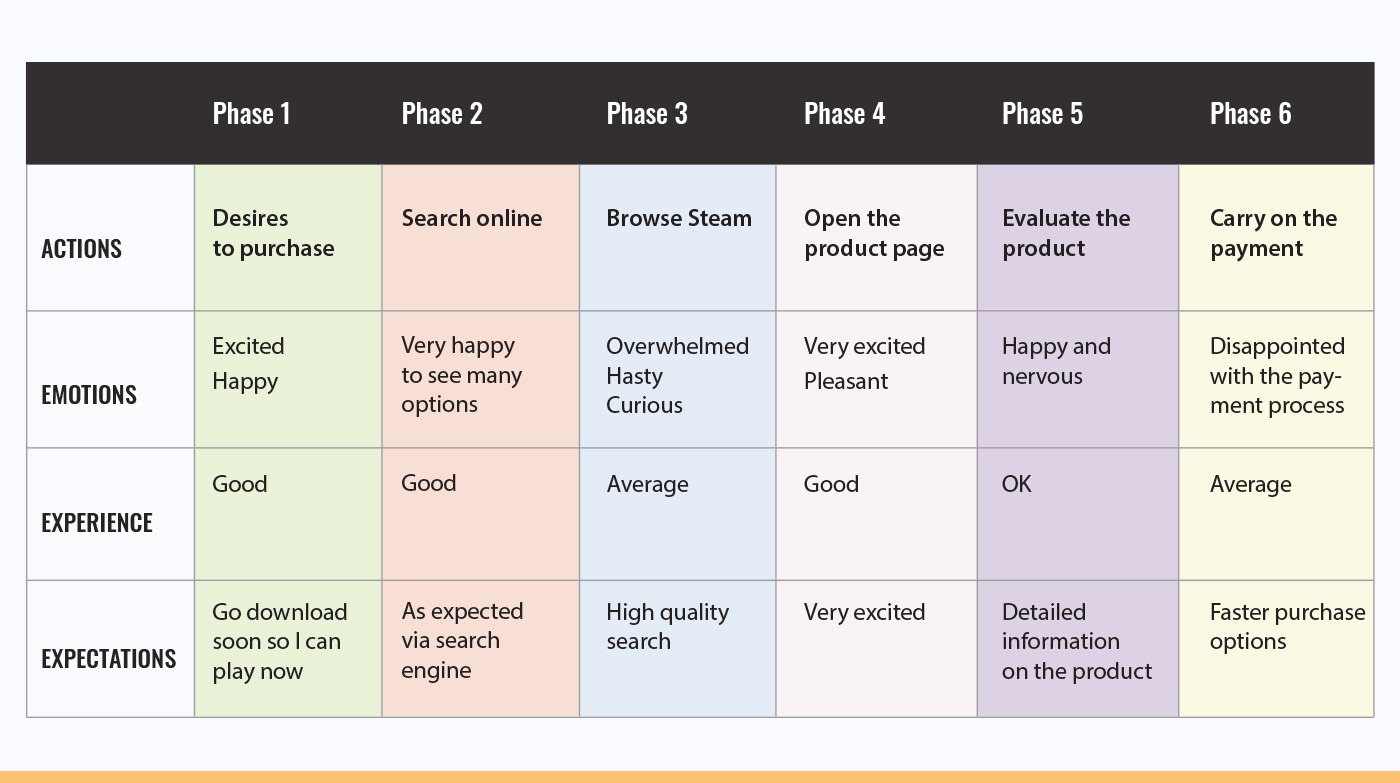
Customer journey - purchasing a game
Ideation
We used ideation methods (brainstorming, brain writing and challenge assumptions) to come up with solutions for the discovered pain points.
Homepage
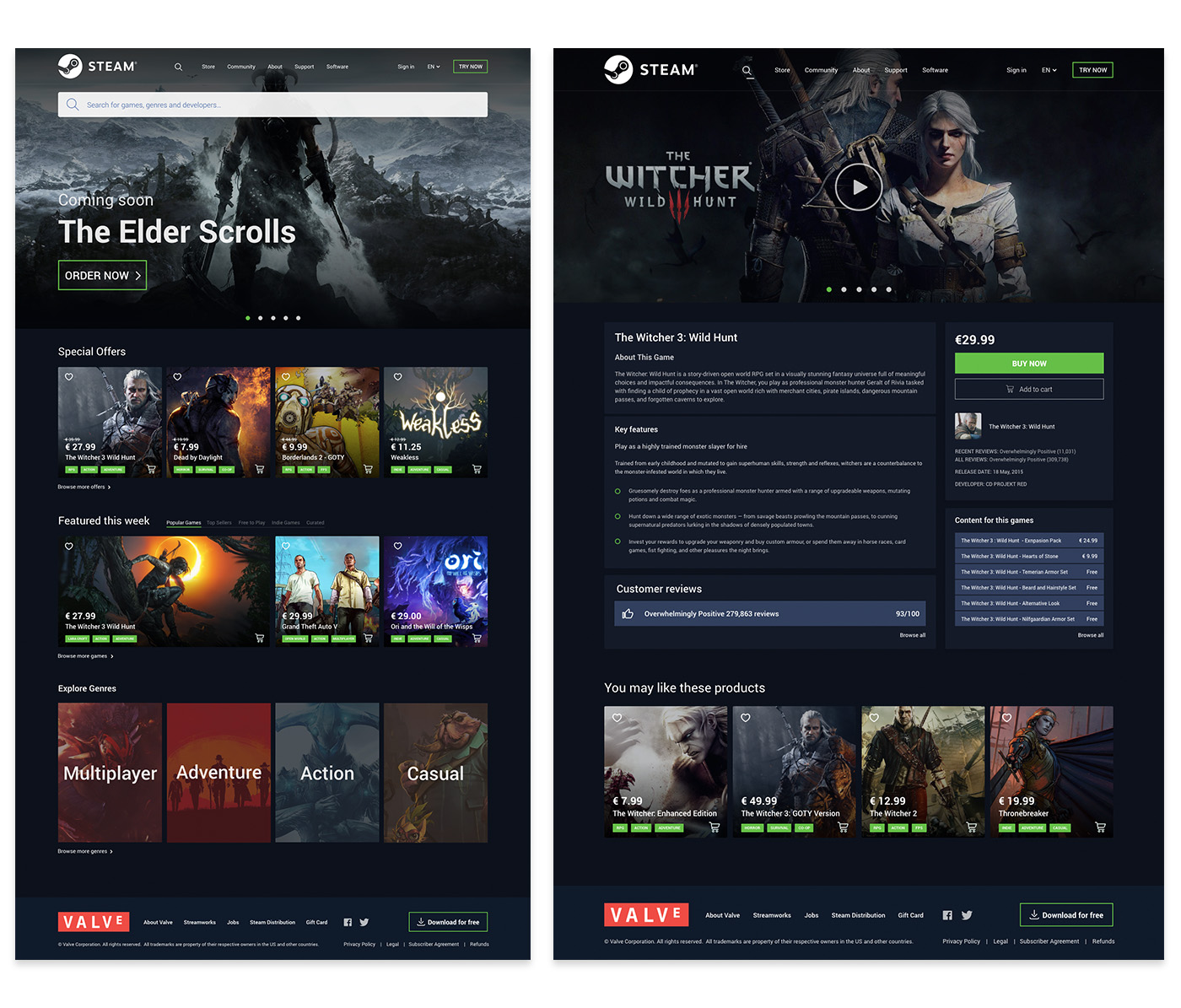
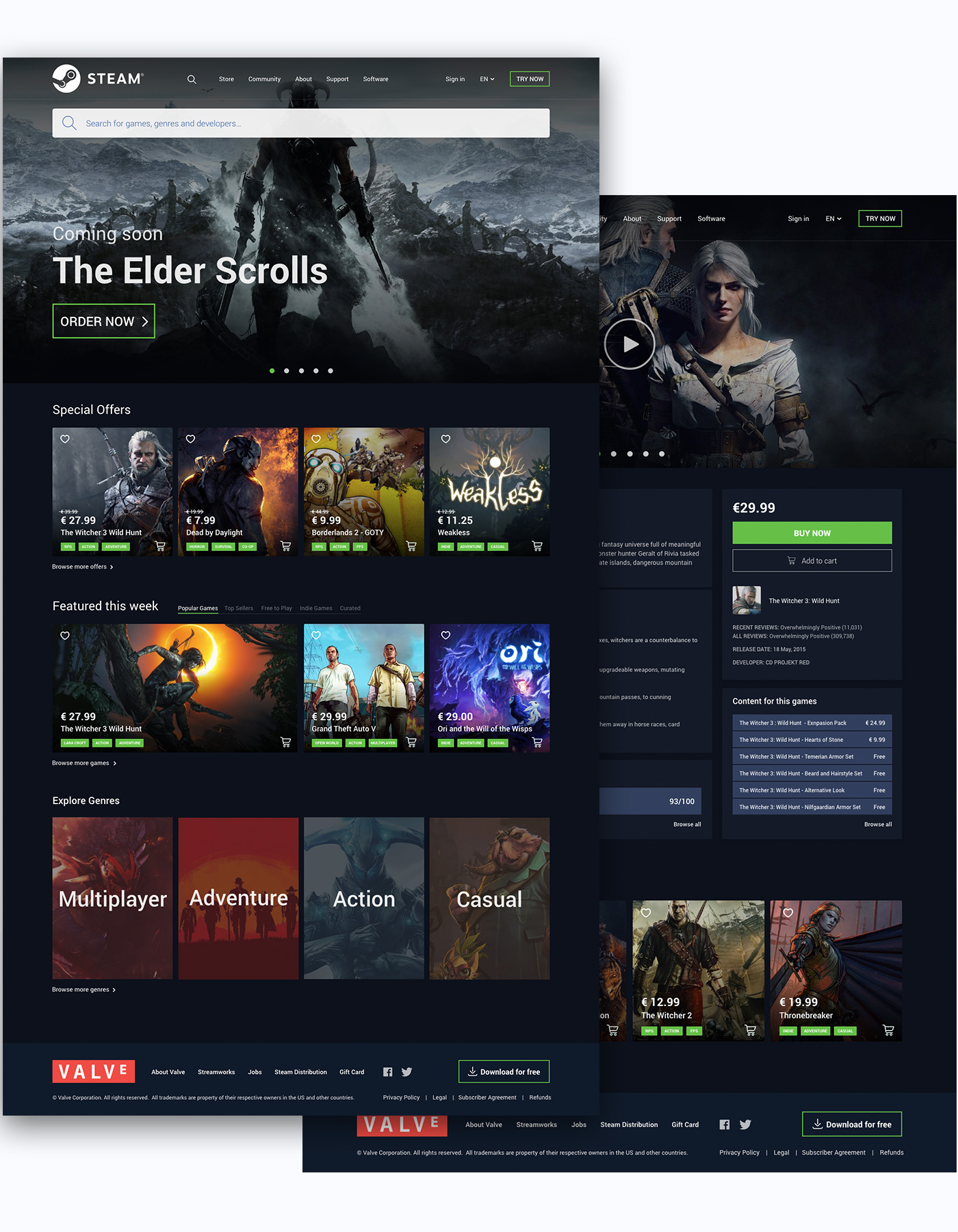
- Search function in the “Steam” homepage used to be small, jaded and went unnoticed.
- I expanded the search function to full view and gave the user a powerful experience.
- Navigation used to cluttered with so many links and unorganised.
- I organised the navigation into categories and sub-categories.
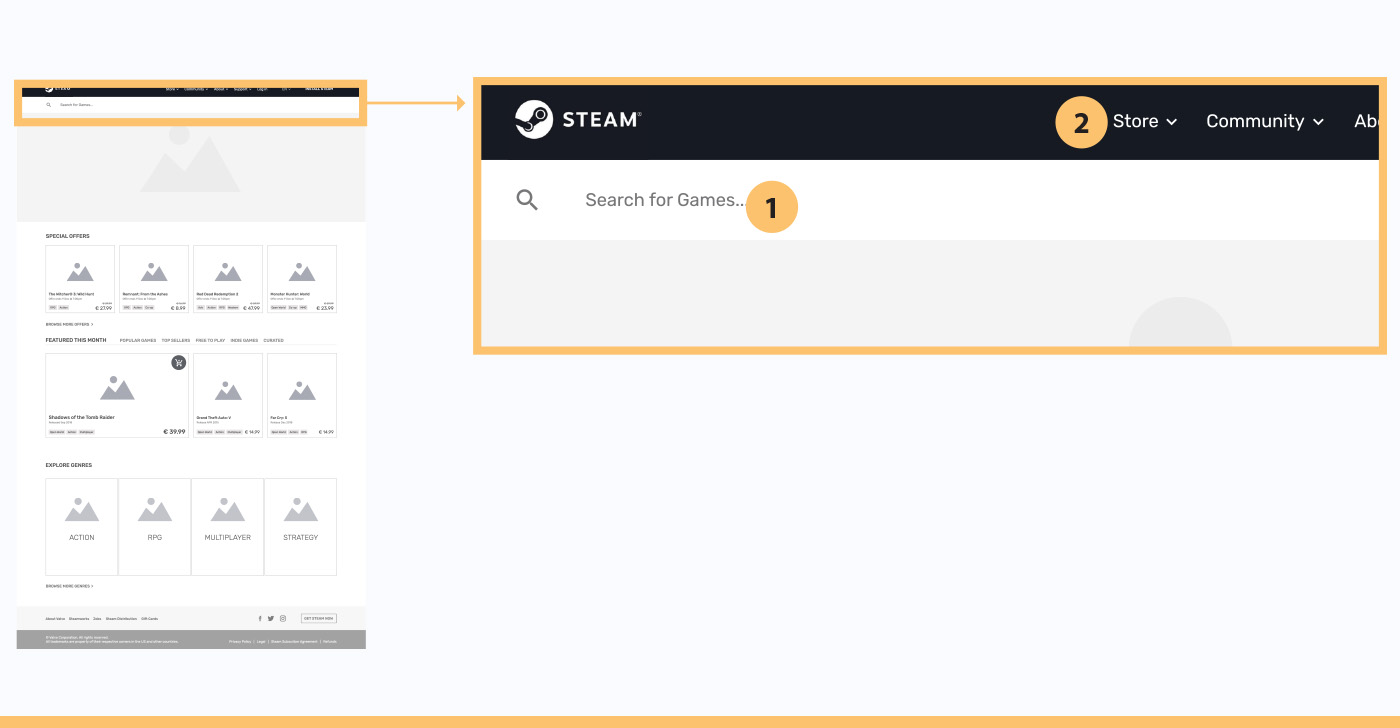
1. Search: User can quickly find the search bar as soon as they visit the home page.
2. Navigation: Each menu item can be expanded to see sub sections. This way you declutter the overall navigation for a pleasant overall UX.
Game details page
- It had no option to buy with a single click and the only option was adding to cart.
- I introduced “Buy now” button that can skip additional clicks and proceed with the payment process.
- “Add to cart” used to be in an odd potion on the page.
- I moved this button into the right side with “Buy now” so it has more clarity and a purpose.
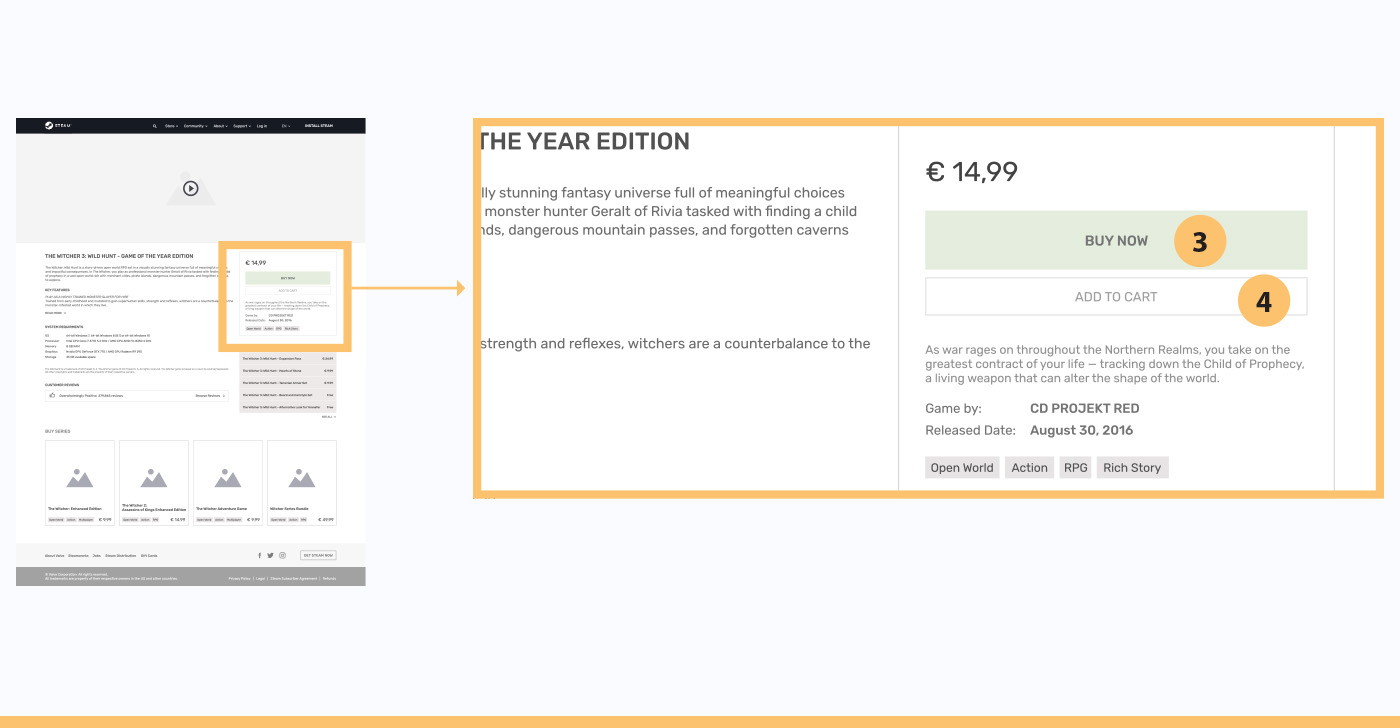
3. Buy now: With one click, the user can proceed to the purchase of their desired game.
4. Add to cart: Rearranged and grouped this button with the other button to give more clarity.
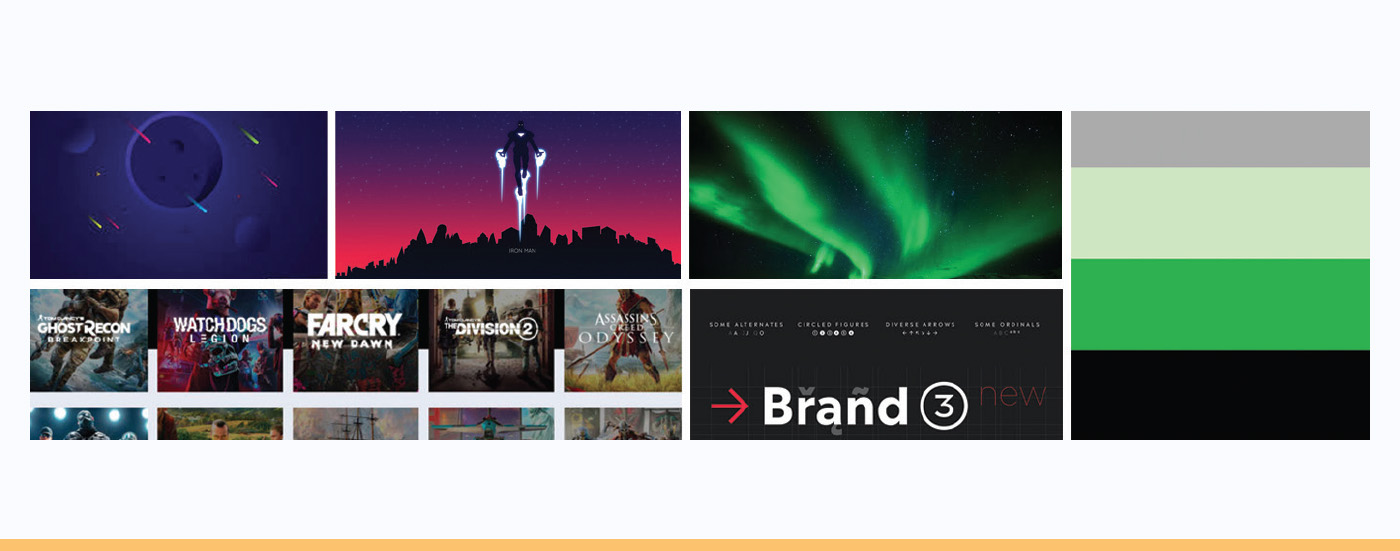
Mood board
Bringing it all to life
Conclusion
After weeks of research, analysis and redesign, I was able to test the assumptions and changes I had made. I used the same 7 users that I previously interviewed and these were the findings;
- Searching for a game or a genre was very satisfying compare to the old design.
- Navigation was much easier to understand but it was too simple. (Room for Improvement)
- Buy now was clearly the favourite, all the users agreed this was the best improvement compare to the old site.
My next steps would be to revisit the navigation, also to proceed with mobile designs to give a satisfying smartphone experience.
Final thoughts
This UX case study has been a challenging and rewarding experience for me. The most important things I’ve learnt from this project were “looking at the bigger picture”.
Looking at the bigger picture, steam is used by millions of people worldwide it’s vital that stay competitive and current.
This was an opportunity to strengthen my research skills and get more involved in the process of learning about our users and their needs.